
A Unified Framework for Analysis and Authentication
Context → Provenance → Examination → Analysis → Interpretation → Authentication → Valuation


To meet evolving regulatory requirements—including USPAP and IRS qualified appraisal standards—alongside emerging scientific protocols and the increasing demands of high‑stakes collection management, John Buxton and Mark Rasmussen have developed a comprehensive five‑part framework. This framework establishes a modern, standardized benchmark for the investigation, characterization, and valuation of ethnographic art.
The Five-Part Framework
Manufactured Certainty — How Misinformation Enters the Tribal Art Record This article examines the mechanisms that install misinformation in the record: confirmation bias and anchoring, survivorship bias in the auction archives, the illusory truth effect, sunk costs and willful blindness, scarcity and urgency in sales rhetoric, the amplifying economics of the internet and generative AI, and certificates and publications that substitute authority for evidence. Documented Pre-Columbian, African, and Native American cases show each mechanism at work, followed by a practical verification discipline.
The Authority Cascade — When Authority Begins to Outpace Evidence🌊 This article introduces the Authority Cascade, a conceptual framework that illustrates how interpretations can gain credibility through publication, institutional attention, market circulation, and repeated citation. It is not a criticism of scholarship or expertise. Rather, it is a reminder that authority and evidence are related, but they are not the same thing. As an object's scholarly, cultural, legal, or financial importance increases, the expectation for independent verification should increase as well.
Toward a Standard for the Characterization of the Physical Condition of Tribal and Indigenous Artwork This article proposes a six-grade scale for African, Oceanic, Native American, and Pre-Columbian material, paired with four evidence tiers—direct examination, imaging, materials characterization, and dating—and three confidence levels that disclose what each grade actually rests on. It addresses deceptive alterations and fraud indicators, historic pesticide contamination, consent requirements that constrain examination, and why condition adjustments to value are derived from comparables rather than read mechanically off a grade.
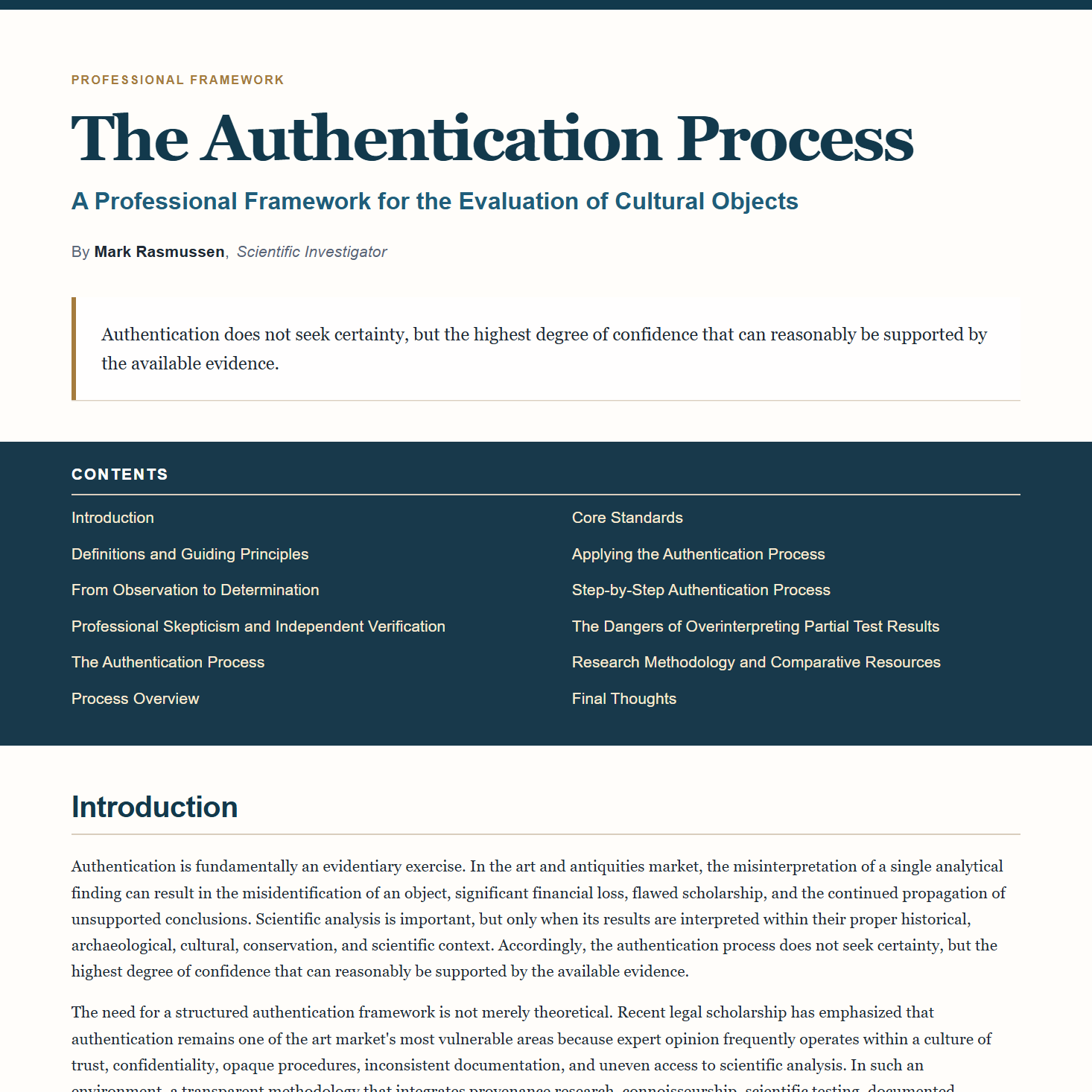
The Authentication Process — A Professional Framework for the Evaluation of Cultural Objects The authentication of cultural objects is fundamentally an evidentiary process. No single observation, laboratory result, or expert opinion is sufficient in isolation. Reliable conclusions emerge only when historical research, comparative analysis, scientific testing, provenance, conservation history, and professional judgment are evaluated together within an appropriate historical, archaeological, cultural, and scientific context. As the article emphasizes, observations become evidence only after their reliability has been evaluated, and evidence becomes findings only after careful interpretation.
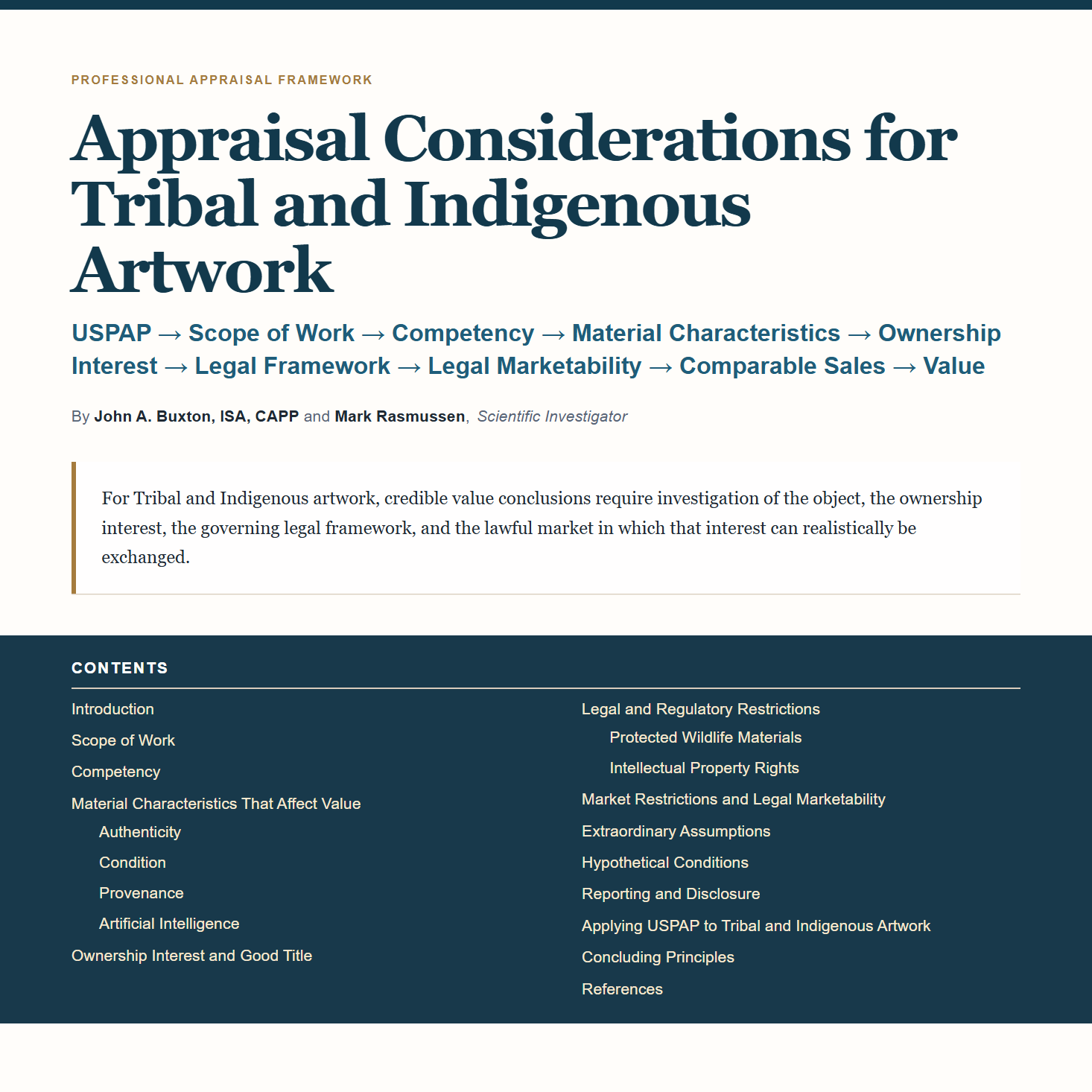
Appraisal Considerations for Tribal and Indigenous Artwork This article examines how USPAP applies to these assignments—scope of work, competency, authenticity, condition, provenance, ownership and good title, protected wildlife and plant materials, intellectual property rights, extraordinary assumptions, hypothetical conditions, and disclosure. It introduces legal marketability, the principle that comparable sales must reflect comparable legal rights rather than comparable objects alone, and it addresses the Appraisal Standards Board's recent guidance on artificial intelligence in appraisal practice.
John Buxton, ISA CAPP, is a highly respected expert in Traditional Indigenous Art, specializing in African, Native American, Oceanic, and Pre‑Columbian cultural material. With more than forty years of hands‑on experience, he is one of the few ethnographic generalists in the United States whose expertise spans authentication, appraisal, connoisseurship, and cultural‑materials research at a deep and comprehensive level.
Authenticating Tribal Art requires navigating an evolving landscape of increasingly sophisticated forgeries. Buxton’s expertise—shaped by decades of examining objects made for ceremonial use, commercial sale, or deliberate deception—is reinforced by sustained collaboration with leading scholars, museum professionals, and field specialists. His appraisal methodology is widely recognized, and he is frequently consulted to evaluate the rigor of appraisal reports outside the Tribal Art field or to assemble multidisciplinary appraisal teams for complex, high‑value projects.
Buxton has served as a legal expert witness in African and Pre‑Columbian art disputes and appeared for more than twenty‑five years as the lead appraiser for African, Oceanic, and Pre‑Columbian art on PBS’s nationally recognized Antiques Roadshow since its inception in 1996. He is also the owner of Shango Galleries in Dallas, Texas, which has specialized in Traditional Indigenous Art since 1976.
He is an experienced lecturer and seminar leader, having presented on Tribal Art, authenticity, and appraisal methodology at institutions such as the Smithsonian National Museum of African Art, the Kimbell Museum, the Dallas Museum of Art, the Birmingham Museum of Art, the McClung Museum, the National Cowboy and Western Heritage Museum, the Arizona State Museum, the Association of Midwest Museums, and the International Society of Appraisers. His educational work reflects a long‑standing commitment to advancing connoisseurship, cultural literacy, and professional standards within the field.
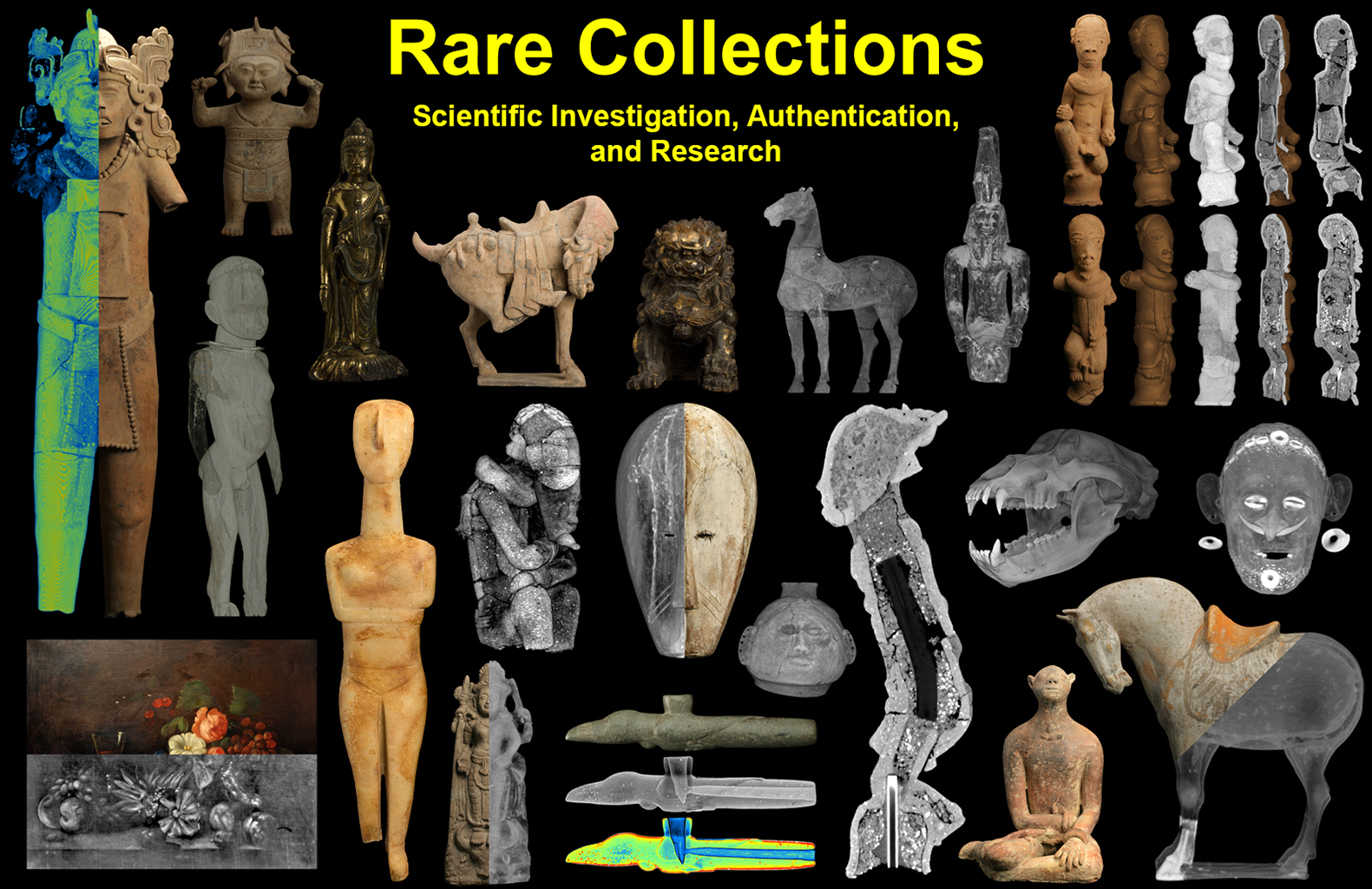
Mark Rasmussen is a recognized specialist in the scientific analysis of artwork and archaeological material with over twenty four years of hands-on experience. His approach integrates materials science, forensic methodology, and advanced analytical technologies—reflecting a technical perspective shaped by decades of experience as an engineer and technology‑industry leader. Rasmussen is an early adopter and pioneer in applying advanced tools such as CT scanning, multispectral imaging, artificial intelligence, and technical automation to art, provenance research, and cultural‑materials investigations.
As the founder of Rare Collections, he has supported technical investigations for major museums—including The Metropolitan Museum of Art, The Brooklyn Museum, and the Art Institute of Chicago—as well as leading auction houses and private collectors. Rasmussen is also a published author in the field of scientific authentication, contributing peer‑reviewed work on terracotta analysis and due‑diligence standards.
He is a frequent lecturer on authenticity, scientific due‑diligence, and risk assessment, having presented to organizations such as the International Society of Appraisers, the Internal Revenue Service, Harvard University, the University of Minnesota, Arizona State University, the Smithsonian Institution, and other academic and museum institutions. His collaboration with John Buxton has contributed to the scientific evaluation and appraisal due‑diligence of hundreds of objects across African, Native American, Oceanic, and Pre‑Columbian collections.
Rasmussen has additionally provided expert support in authenticity disputes for prominent law firms, including cases involving millions of dollars in contested artworks.
Mark has been my secret weapon for more than twenty years, and I’m thrilled to continue showcasing the remarkable results we’ve achieved together.
John Buxton, Owner, ArtTrak
For Appraisals & Authentication, send photos, collection history, and dimensions to:
[email protected]