Art Fairs
TEFAF (The European Fine Art Fair) Maastricht
"I was pleasantly surprised by the exceptional caliber of work at TEFAF (The European Fine Art Fair) Maastricht 2026; the quality this year was easily the best I have seen in years. The Arts of Africa & Oceania section and surrounding tribal art displays were particularly outstanding. It is well worth checking out the YouTube segments linked below to see the highlights."
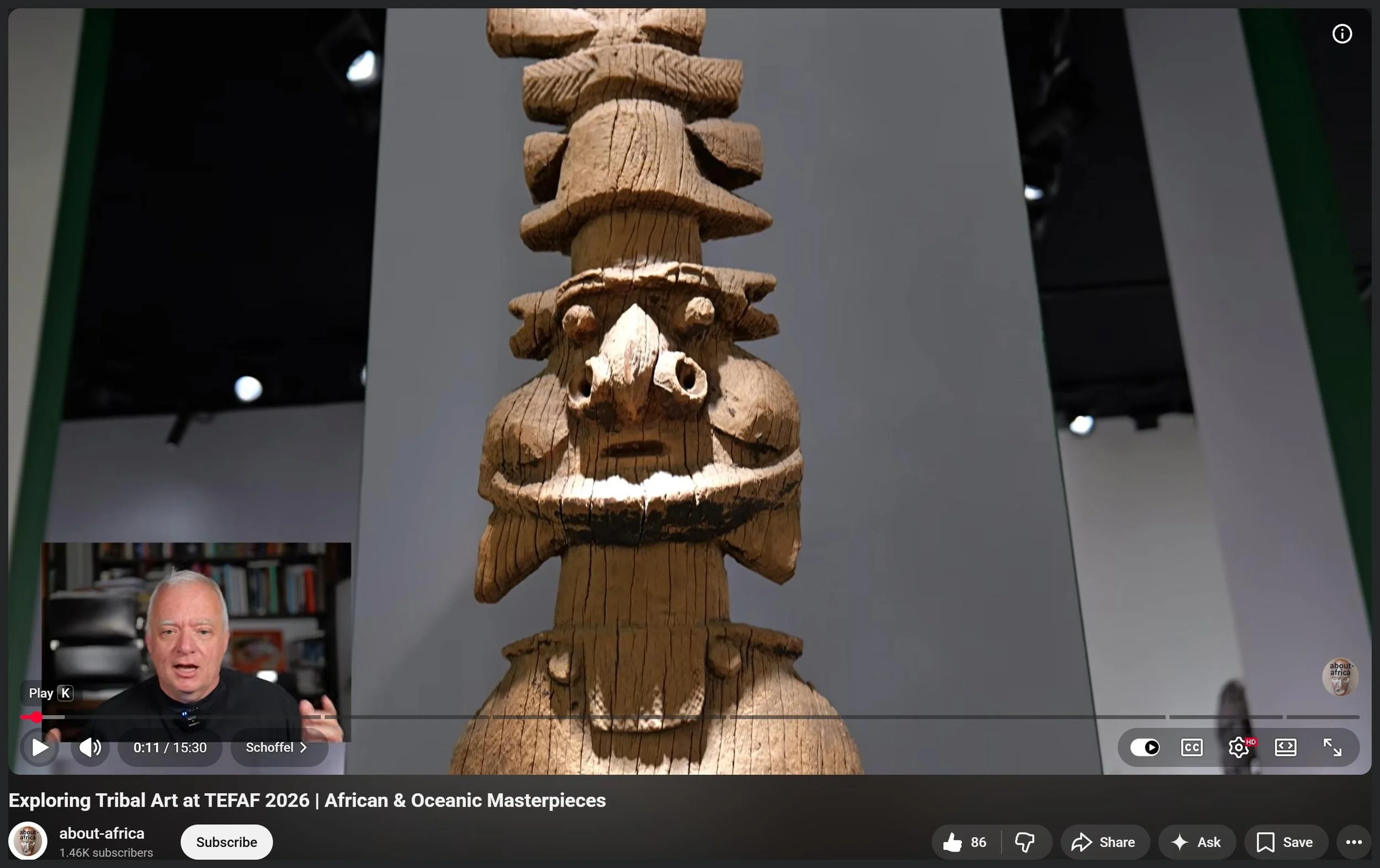
A walk through the Tribal Art galleries at TEFAF 2026 in Maastricht. In this video I explore several galleries presenting exceptional works from Africa and Oceania. Masks, sculptures and ritual objects from different cultures are on view, shown by some of the leading dealers at the fair. 00:00Schoffel 1:54Montagut 3:30Ferrandin 5:26Ratton 8:11De Grunne 13:19Mestdagh 14:39Colnaghi TEFAF is one of the most important international art fair, bringing together museum-quality works from around the world. TEFAF Maastricht 2026 Information: 📅 Dates: March 14 – 19, 2026 📍 Venue: MECC Maastricht, Netherlands 🏛️ Opening Hours: 11 AM – 7 PM (Closing March 19 at 6 PM) The fair is currently running! If you are a collector or art lover, it is well worth a visit. Filmed and commented by Ingo Barlovic
The tribal art sector at TEFAF Maastricht 2026 offered an incredibly sophisticated, scholarly, and commercially robust showing. While TEFAF is historically celebrated for its Old Masters, its highly selective tribal art section—featuring arts of Africa, Oceania, and the Americas—has become one of the fair's most intellectually stimulating corners.
In 2026, the guiding theme among elite tribal art dealers was a deliberate "trans-historical dialogue," pairing museum-grade ancient and traditional ethnographic artifacts directly with modern and contemporary masterworks to attract a broader demographic of collectors.
Standout Exhibitors and Curatorial Highlights
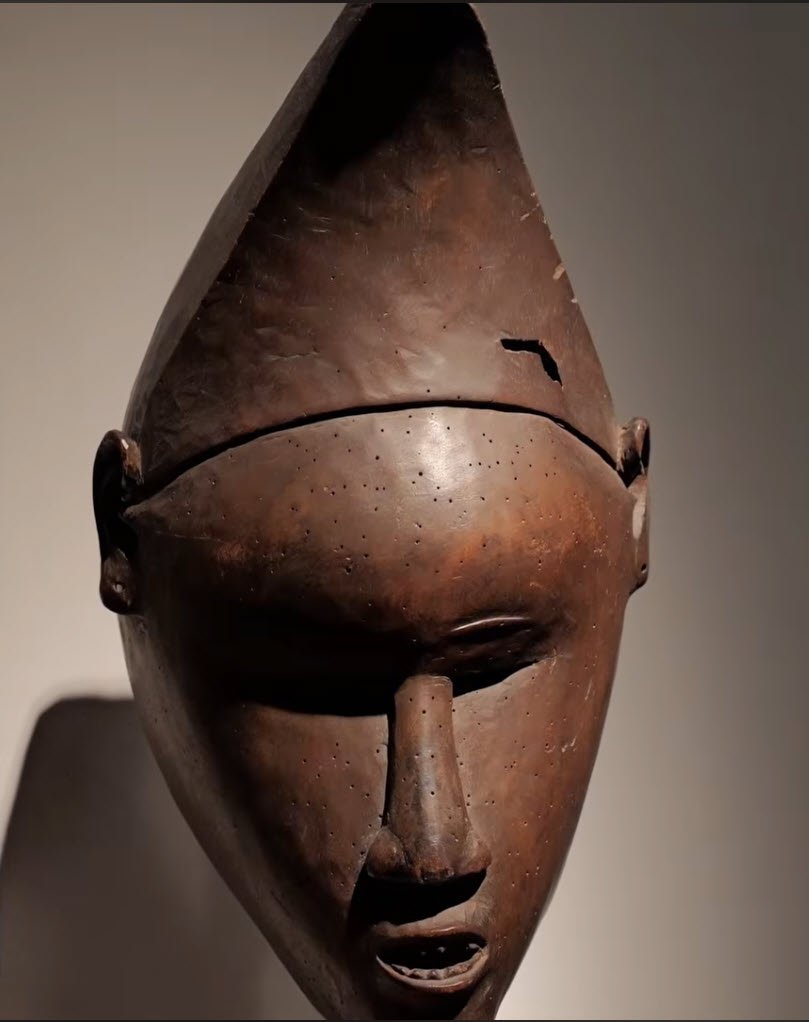
Yombe, Democratic Republic of the Congo
Galerie Montagut: Ancient Ancestors & Modern Masters
After a successful showing in the "Showcase" section in previous years, Galerie Montagut stepped up with an exceptionally ambitious presentation.
The Masterpiece: The centerpiece of their booth was a magnificent, carbon-dated 13th-century Djennenke ancestor figure from Mali (with impeccable provenance, formerly belonging to the legendary collector Allan Stone).
The Dialogue: Montagut cleverly surrounded this ancient wooden sculpture with roughly thirty intricate, small-scale Baule and Ashanti gold objects. To bridge the gap across centuries, they hung modernist paintings by Joan Miró and Wifredo Lam right alongside them, explicitly demonstrating how tribal forms reshaped 20th-century Western avant-garde perspective.
Galerie Serge Schoffel: Global Eclecticism
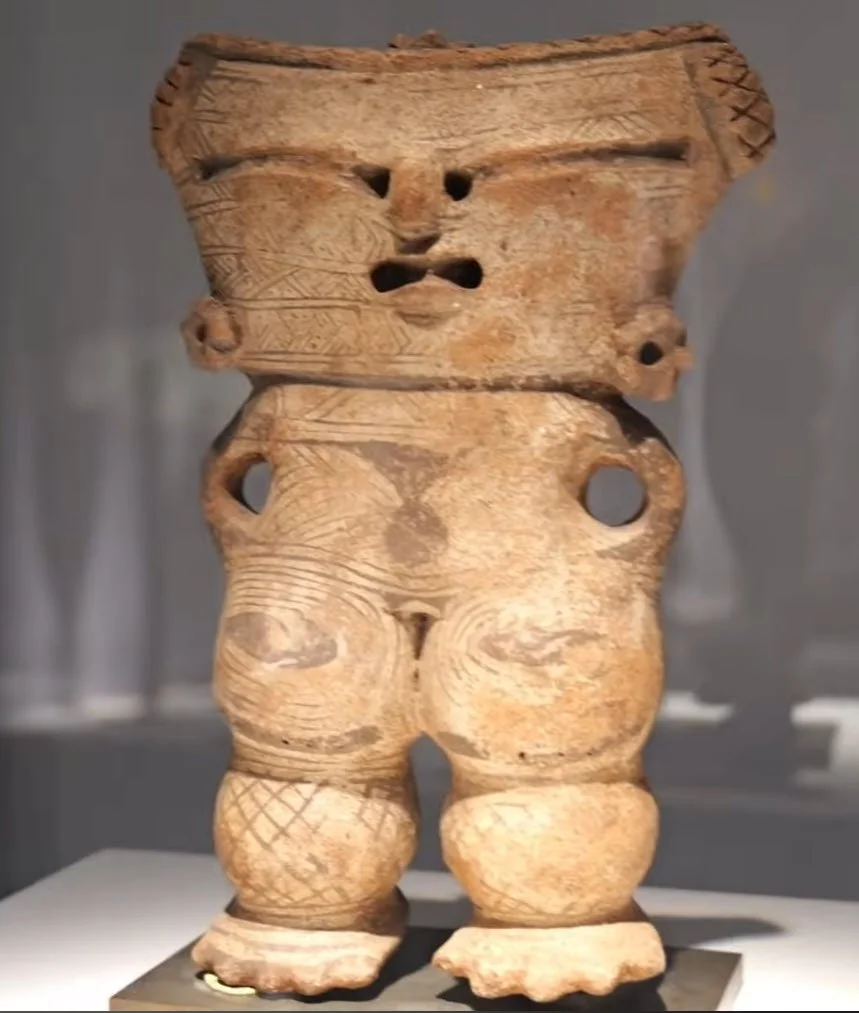
Trujillio, Western Venezuela - Pre-Columbian ceramics from the Trujillo region belong to the Timoto-Cuica culture complex, which dominated the Venezuelan Andes from roughly 600 CE until Spanish contact
Serge Schoffel opted for a heavily curated, global investigation of ritualistic form and function. Their presentation didn't focus on just one region, but instead masterfully juxtaposed statues, masks, and body adornments from Africa, Melanesia, Indonesia, and the Pre-Columbian Americas.
The Highlight: A standout piece was a highly expressive 19th- to early 20th-century Makonde lipiko mask from Mozambique. Carved from wood and detailed with beeswax, the mask carried a storied provenance, having passed through major collections including Walter Bareiss, Pierre Dartevelle, and Guy Laliberté before arriving at Maastricht.
Galerie Bernard de Grunne: The Ubangi Region Focus
Bernard de Grunne chose a deeply academic, hyper-focused approach for the 2026 fair, turning the spotlight onto the arts of the Ubangi region in Central Africa.
The Exhibition: De Grunne presented a collection of rare works highlighting the sculptural traditions of the Ngbaka and neighboring peoples. The booth functioned almost like a pop-up museum exhibition, complete with a newly published, scholarly catalogue co-authored with Central African art specialist Jan-Lodewijk Grootaers. A stunning, beautifully patinated Ngbaka female figure anchored the display.
Galerie Lucas Ratton: Unseen Masterpieces and Cross-Cultural Pairings
Marking his eleventh year at TEFAF, Lucas Ratton brought an array of completely fresh-to-the-market works displayed within an elegant booth designed by René Bouchara.
The Highlight: The star attraction was a powerful 19th-century Songye nkishi power figure from the Democratic Republic of the Congo, attributed to the rare Kalebwe ya Ntambwe style. The piece was highly praised for its aggressive formal geometry and intact ritual elements (fiber, metal, and wood).
Ratton also engaged in cross-cultural curation by placing these highly expressive African power objects in direct visual conversation with an 18th-century classical German sculpture, creating a stunning contrast of textures and spiritual intents.
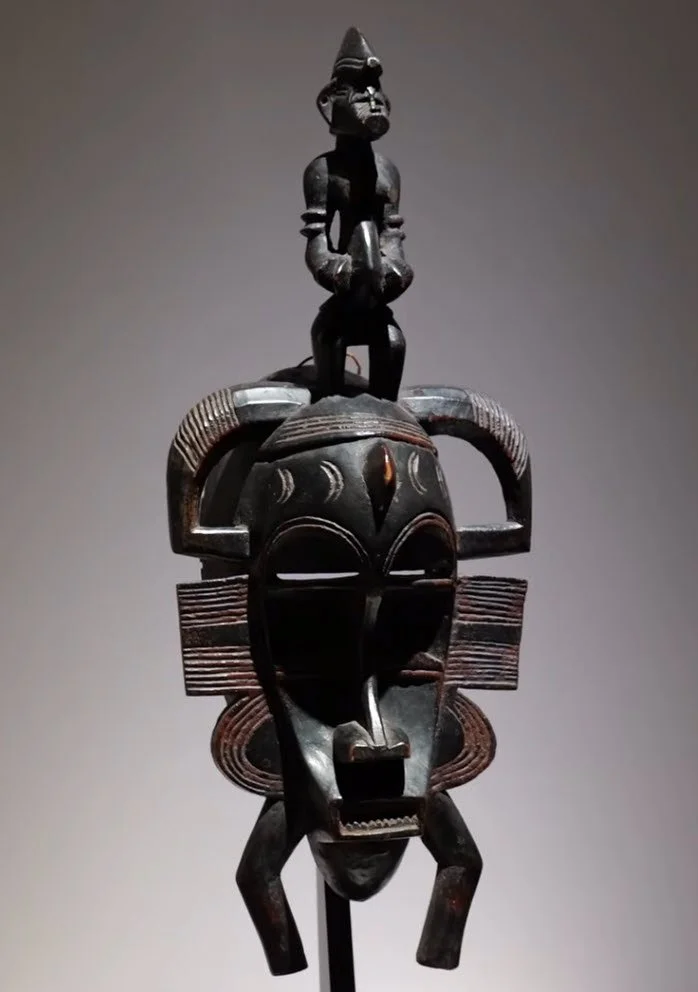
Senufo, kpelie mask, Burkina Faso, West Africa
Yann Ferrandin & Grusenmeyer-Woliner: Trans-Historical Wonders
Galerie Ferrandin expanded borders by exploring sculptural traditions spanning from Africa and Oceania all the way to the Pacific Northwest Coast and Japan. They notably paired a premium Baule sculpture (associated with goldsmithing) with a monumental 11th-century Japanese Heian-period Kannon Bosatsu sculpture.
Grusenmeyer-Woliner presented a mesmerizingly diverse booth that featured a Late Period Egyptian wood-and-bronze Ibis alongside a phenomenally preserved, highly graphic ceremonial Nazca feather poncho from ancient Peru.
Paris Tribal 2026
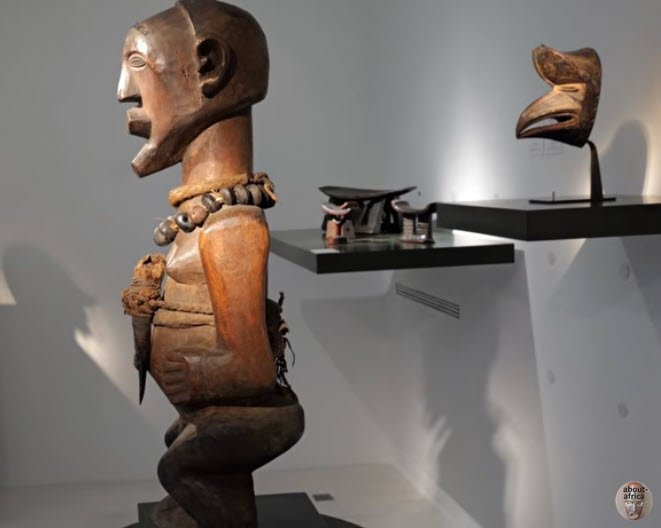
Paris Tribal 2026 took place in Paris from May 12–17, 2026. This is the second video that presents selected highlights and noteworthy objects from galleries specialising in traditional art from Africa, Oceania, the Americas, and the Himalayas. Part 2. Filmed and commented by Ingo Barlovic, www.about-africa.de https://youtu.be/NGhU22wZqGc
The Vibe: Rigorous Vetting and the "Cross-Collecting" Boom
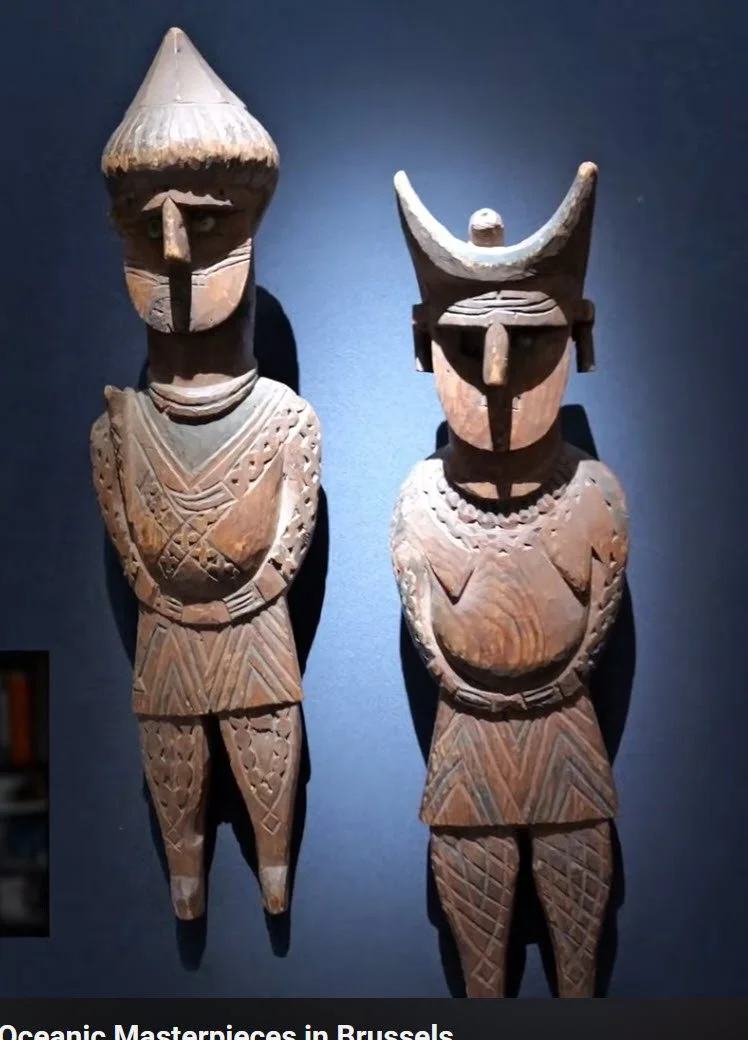
The Kalasha (“Kalash Kafirs”) are the last non-Islamic people of the Hindu Kush mountains of northern Pakistan.
The overarching sentiment among tribal art dealers at TEFAF Maastricht 2026 was one of strong market validation. Because TEFAF utilizes some of the strictest authenticity and provenance vetting committees in the entire art world, buyers felt incredibly secure making high-value acquisitions.
Furthermore, the fair’s aggressive push toward "cross-collecting" paid off beautifully for this sector. Tribal art was no longer treated as an isolated category; instead, contemporary art collectors and Old Master connoisseurs alike flocked to these booths, recognizing that these traditional artifacts possess a timeless, abstract power that enhances any modern aesthetic.
BRAFA - Brussels Antiques & Fine Arts Fair
The Brussels Antiques & Fine Arts Fair (BRAFA) two thousand twenty-six, celebrating its 71st edition at Brussels Expo, solidified its reputation as a premier destination for "cross-collecting." Amidst the Old Masters, contemporary installations, and mid-century design, Tribal Art (classical African, Oceanic, and Amerindian art) remained one of the fair's strongest and most fascinating anchors.
The tribal art market at BRAFA two thousand twenty-six demonstrated a highly successful blend of major historical masterpieces and a powerful influx of emerging, younger collectors.
Key Highlights and Market Trends
High-Value Masterpieces Command Attention
BRAFA has always been a stronghold for elite tribal art dealers, and this year proved that premium provenance still drives the market.
Claes Gallery (Stand 41): As a leading specialist in the field, Claes Gallery made headlines early in the fair by selling an important Dan Mano mask (from the Ivory Coast/Liberia region) for nearly €150,000. The piece was praised for its exceptional patina and classical proportions, attracting seasoned international buyers.
The Rise of the Next-Generation Collector
While six-figure masterpieces drew the headlines, the real story of the two thousand twenty-six fair was the commercial success of more accessible tribal pieces.
Claes Gallery also reported a wave of sales for smaller Ghanaian Fante dolls, all priced under €10,000.
These were overwhelmingly snapped up by a younger generation of collectors. This shift indicates that tribal art is successfully breaking out of its traditional, insular niche and appealing to modern, minimalist aesthetics where these objects are displayed alongside contemporary art or vintage design.
Curatorial Synergy: Tribal Meets Modern
One of the reasons tribal art thrives at BRAFA is the fair's layout, which encourages dialogue between different eras. Visitors walking the aisles frequently saw classical African sculptures paired with post-war European abstractions or 20th-century design furniture.
Dealers successfully capitalized on this by showcasing how the raw, expressive forms of traditional African and Oceanic artifacts originally inspired the Western avant-garde (like Picasso or the Expressionists), making a compelling case for modern collectors to integrate these pieces into eclectic contemporary spaces.
Summary of the Two Thousand Twenty-Six Landscape
FeatureTrend at BRAFA Two Thousand Twenty-SixTop SaleDan Mano Mask (Claes Gallery) for approx. €150,000Emerging SegmentGhanaian Fante dolls and smaller tokens under €10,000Buyer DemographicsSignificant influx of younger, first-time tribal art buyersAesthetic VibeDisplayed in "cross-collecting" setups alongside modern design
Art fair tribal art 2026 https://www.youtube.com/watch?v=ANS0h8RyCao