Promoting a Brancusi
Nicole Kidman visits Constantin Brancusi's ‘Danaïde’ | The S.I. Newhouse Collection | New York
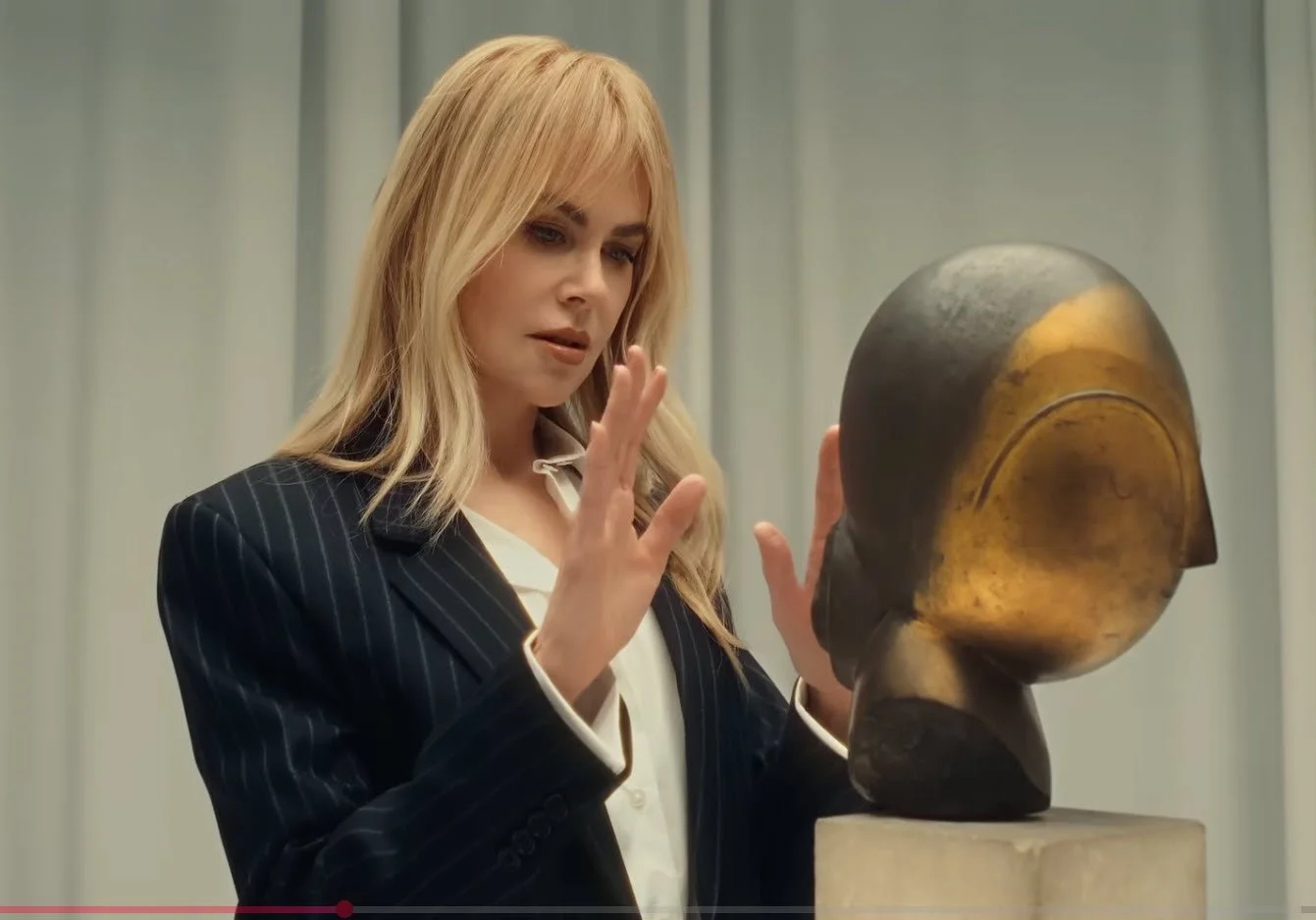
Christie’s recently released a high‑profile promotional short film featuring Nicole Kidman interacting with Constantin Brancusi’s Danaïde (1913). The video—produced by Studio 11F to promote the sale of MASTERPIECES: The Private Collection of S.I. Newhouse—has circulated widely across social media and auction‑world press. According to Christie’s promotional materials, the film is designed to “bridge past and present” as Kidman encounters Brancusi’s sculpture in a dreamlike, suspended moment.
Perspective: A Triumph for Christie’s, A Misstep for Kidman
While this campaign stands as a brilliant feat of marketing for Christie’s, it serves as a questionable career move for Nicole Kidman. Instead of a harmonious collaboration between two icons, the video ultimately diminishes a Hollywood mega-star by placing her in direct comparison with Brancusi’s masterpiece.
Next to the effortless elegance, timeless power, and minimalist perfection of the sculpted head, Kidman’s movements and dramatic hand gestures feel forced, over-rehearsed, and contrived. Rather than elevating the performance, the juxtaposition exposes a stark contrast between fleeting theatricality and enduring artistic genius—proving that even a Hollywood legend can be entirely eclipsed by the quiet authority of great art.
Conceptual Framework & Artistic Lineage
The short film, directed by Stephen Tyler, traces its conceptual DNA back to avant-garde art history—specifically referencing Man Ray’s iconic 1930s film of surrealist muse Lee Miller interacting with Brancusi’s work. Structurally, the campaign places Nicole Kidman in Christie’s Rockefeller Center galleries. As she approaches the gilded bronze sculpture, the bustling New York landscape stops, and she enters a dreamlike, ecstatic state.
Using David Bowie’s "Golden Years" as the soundtrack provides a clever, rhythmic juxtaposition. It directly mirrors the brilliant, gold-leaf patina of the Danaïde (one of only two gilded metal versions in existence, and the only one remaining in private hands). By casting Kidman—an elegant, statuesque figure in her own right—the directors attempt a visual dialogue between two kinds of "muses": Margit Pogany (the Hungarian artist who inspired Brancusi) and a contemporary Hollywood icon.
Critique of Execution: The "Gilded" High-Fashion Aesthetic
From a technical and marketing standpoint, the video succeeds brilliantly in elevating the artwork’s profile. Shot by cinematographer Paul Theodoroff, the campaign relies heavily on high-fashion visual grammar: dramatic panning shots, close-ups of texture, and a trippy montage where Kidman envisions other classic masterpieces. It functions flawlessly as a luxury teaser, helping propel the sculpture to a staggering, record-breaking $107.6 million sale.
However, the video falters when analyzed through a purely artistic lens:
Over-the-Top Performance vs. Minimalist Subject: Brancusi’s genius lies in his radical reduction of form to its absolute essence. Danaïde is quiet, infinite, and balanced. In contrast, Kidman’s performance features her dancing, spinning, and acting out an intensely dramatic "dream state." To a seasoned collector, this interpretive choreography can feel hyperactive, distracting from the hypnotic, stillness of the sculpture itself.
The "Celebrity Eclipse" Risk: Some critics and viewers have noted that the ad veers into a celebrity spectacle rather than an art appreciation piece. When a promotional video relies on a hyper-stylized montage of an actress reacting wildly, public discourse frequently shifts away from the object's provenance (such as its history with Eugene and Agnes Meyer) and toward the actress's appearance and performance.
Commercial Sensationalism: The film trades Brancusi’s philosophy—"Look at my sculptures until you manage to see them"—for a fast-paced, digital-first aesthetic designed to go viral on platforms like YouTube and Instagram. It favors immediate sensory overload over the slow, contemplative gaze that traditional modern sculpture demands.
High‑Fashion Aesthetic vs. Brancusi’s Philosophy - Cinematographer Paul Theodoroff’s glossy, high‑fashion visual language—panning shots, shimmering textures, and rapid‑fire montage—creates a luxury‑brand atmosphere. It works commercially, but it runs counter to Brancusi’s own instruction: “Look at my sculptures until you manage to see them.” The film encourages quick consumption, not slow contemplation.
Summary
The Christie’s campaign is an undeniable triumph of luxury marketing, successfully transforming a 113-year-old modernist artifact into a viral, contemporary cultural event. Yet, by substituting the profound, meditative stillness of Brancusi’s work with a theatrical, high-fashion performance, it walks a thin line between genuine artistic homage and commercial sensationalism. It proves that in today's secondary art market, selling a $100 million masterpiece requires selling a highly produced, Hollywood-adjacent experience.
Sources Consulted
(All used under fair‑use for commentary and criticism)
Christie’s press release for MASTERPIECES: The Private Collection of S.I. Newhouse
Christie’s promotional video: “Nicole Kidman visits Constantin Brancusi’s Danaïde” (YouTube)
ARTnews reporting on the Newhouse Collection sale
The Art Newspaper coverage of the Brancusi auction result
Studio 11F production notes (publicly available interviews and credits)
Historical scholarship on Brancusi and Man Ray (MoMA, Centre Pompidou archives)
Fair‑Use Notice
This article contains commentary and criticism on publicly released promotional materials. All artworks, trademarks, and media referenced remain the property of their respective owners.
https://www.youtube.com/watch?v=nMDlal5tQP8