Stolen Art — Lessons Learned
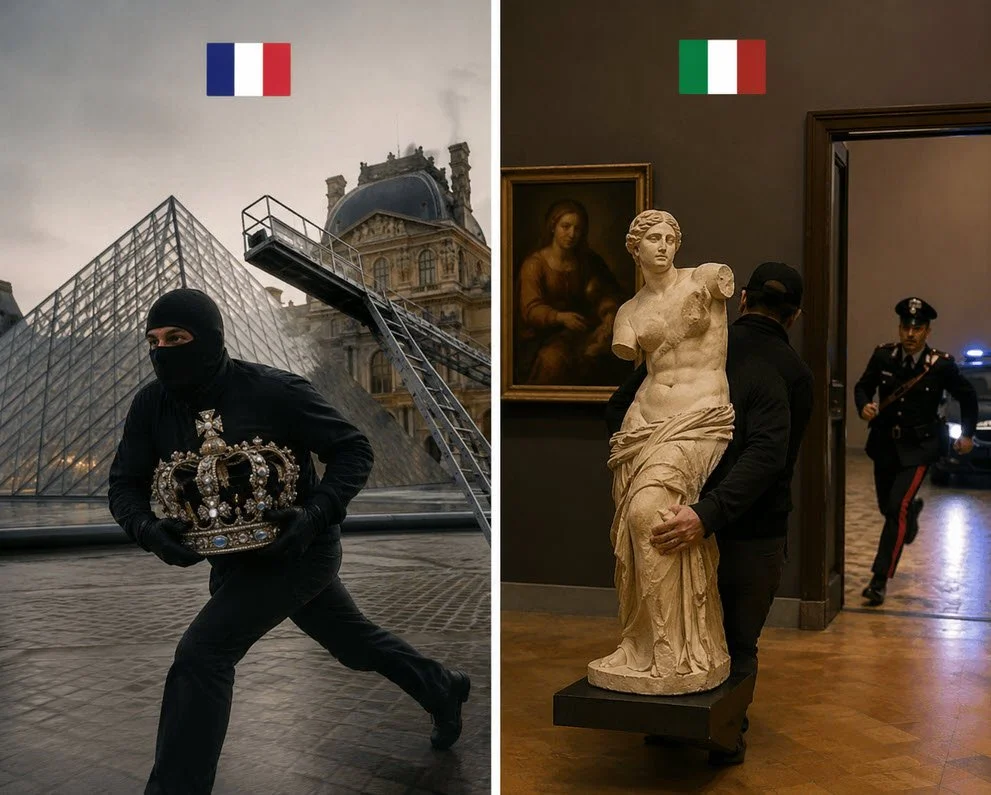
High-profile cultural property thefts—specifically the dramatic Louvre jewel heist in Paris and the Magnani-Rocca Foundation break-in near Parma, Italy—have triggered a major reassessment of museum security across Europe.
The Parma Museum Heist and Recovery
On the night of March 22, 2026, four masked thieves broke into the Magnani Rocca Foundation (located in Mamiano di Traversetolo, near Parma, Italy) through a back gate and forced open a door with a crowbar. In a slick, highly targeted operation lasting less than three minutes, the crew bypassed security and stripped three masterworks right off the walls: The combined value of the stolen French masterpieces exceeded €9 million ($10.4 million)
Paul Cézanne: Tasse et Plat de Cerises (Cup and Plate of Cherries)
Pierre-Auguste Renoir: Les Poissons (The Fish)
Henri Matisse: Odalisque sur la Terrasse (Odalisque on the Terrace)
Security analysts, law enforcement, and cultural institutions have drawn several critical lessons from how these crimes were executed and subsequently resolved:
The Reality of the "Three-Minute Heist"
Speed Over Sophistication: Both incidents demonstrated that well-prepared criminals do not need days inside a building; they rely on brute force, speed, and timing to execute a raid in under three to five minutes.
Copycat Vulnerability: Security experts noted that the high-profile nature of the Louvre breach emboldened copycat thieves, proving to criminal networks that aggressive smash-and-grab tactics can easily outpace antiquated or slow-reacting physical security layers.
Physical and Structural Vulnerabilities
Secondary and Upper-Floor Gaps: Institutions often allocate the vast majority of their security budgets to main entrances and ground-floor choke points. Both the Louvre (second-floor gallery access via ladders/construction scaffolding) and the Parma villa highlighted that secondary entry points and upper levels remain vulnerable.
The Myth of "Untouchable" Institutions: Smaller private or regional museums are frequently targeted because they lack the sprawling security infrastructure of national flagships, though even world-class institutions have historically suffered from fundamental oversights (such as outdated access controls or slow internal response metrics).
The Criminal Dilemma: Stealing vs. Liquidating Art
The Liquidity Problem: As law enforcement and art-crime investigators frequently emphasize, stealing a masterpiece is far easier than selling one. High-profile works cannot easily be fenced on the open market, insured, or publicly authenticated.
Amateur vs. Professional Blunders: In the Parma case, the local network of thieves had plenty of experience with petty burglaries but little idea how to monetize multi-million-dollar modern masterpieces (Cézanne, Matisse, Renoir). This lack of a black-market exit strategy led to hesitation, delays, and ultimately leaving the paintings hidden locally in a cardboard box until Italian Carabinieri tracked them down.
Targeting Raw Material Value vs. Fine Art
There is a distinct divergence in what criminals are stealing today, driven by how difficult it is to launder high-end art:
The Louvre Heist targeted the remaining French Crown Jewels (diamonds, emeralds, and sapphires set in gold and platinum). Gems and precious metals can be physically dismantled, melted down, or re-cut, effectively laundering the raw material beyond recognition.
The Parma Heist targeted world-class oil paintings (Cézanne, Renoir, Matisse). While paintings cannot be melted down, thieves frequently target them to use as leverage in criminal underworld negotiations, to trade for narcotics, or under the delusion that an anonymous private buyer will eventually pay a ransom. The combined value of the stolen French masterpieces exceeded €9 million ($10.4 million).
Modernizing Defensive Strategies
Behavioral AI and Proactive Tech: In response to these rapid-strike methods, major museums are shifting away from purely reactive measures (like standard alarms that sound after a breach) toward AI-powered camera analysis capable of flagging suspicious movement or loitering patterns before a break-in escalates.
Discretion vs. Public Transparency: Following the Parma break-in, officials initially kept details quiet to aid tactical recovery operations. However, balancing public safety, stakeholder transparency, and investigative secrecy remains a delicate tightrope for museum boards.
Catching the Thieves
The Ultimate Weapon: The TPC Stolen Works Database
The cornerstone of every TPC investigation is the world's oldest and most extensive database of illicitly acquired art.
The Scale: The database houses records on well over 1.3 million entries of missing, stolen, or looted cultural property worldwide, complete with descriptions, historical provenance, and hundreds of thousands of high-resolution images.
AI and Deep Web Scraping (S.W.O.A.D.S.): The TPC utilizes S.W.O.A.D.S. (Stolen Works Of Art Detection System), a specialized proprietary platform driven by artificial intelligence. The algorithm continuously crawls the open web, deep web, and darknet marketplaces, scanning auction listings, digital flea markets, and social media channels to flag illicitly traded objects.
Specialized Divisional Expertise
Headquartered in Rome with regional squads distributed across Italy, the TPC divides its operational focus into specific tactical sections:
Antiquities & Archaeology: Tracking illegal excavations and underground trafficking rings.
Fine Art & Antique Dealing: Monitoring legitimate galleries, auction houses, estate sales, and private brokers.
Contemporary Art & Forgeries: Intercepting high-level counterfeits and tracing contemporary heists.
Agents undergo intensive, specialized training in art history, market logistics, cataloging methodologies, and forensic artifact analysis so they can immediately recognize the significance of a recovered piece.
Cross-Border Collaboration and Global Networks
Because stolen masterworks rarely stay in the country where they were stolen, the TPC coordinates tightly with global law enforcement infrastructure:
INTERPOL and Europol: The TPC feeds data directly into international warning systems, allowing border control agencies and customs offices worldwide to flag suspicious cargo or travelers carrying undocumented cultural assets.
Global Task Forces: They routinely partner with foreign ministries and agencies (such as the FBI's Art Crime Team) to dismantle transnational criminal syndicates that use stolen art as a form of parallel currency or collateral in international drug and arms trades.
Ground-Level Forensics and Pressure Tactics
When a physical recovery like the Parma museum heist occurs, the TPC balances digital tracking with old-fashioned investigative grit:
Isolating the "Hot" Market: Masterworks by artists like Cézanne, Renoir, or Matisse are virtually impossible to sell legally. The TPC exploits this by pressuring local criminal ecosystems; once thieves realize the paintings are too toxic to flip through conventional underground channels, the risk-to-reward ratio collapses, often forcing a hurried abandonment or anonymous drop-off.