Issues Confronting the Tribal Art Market 2026
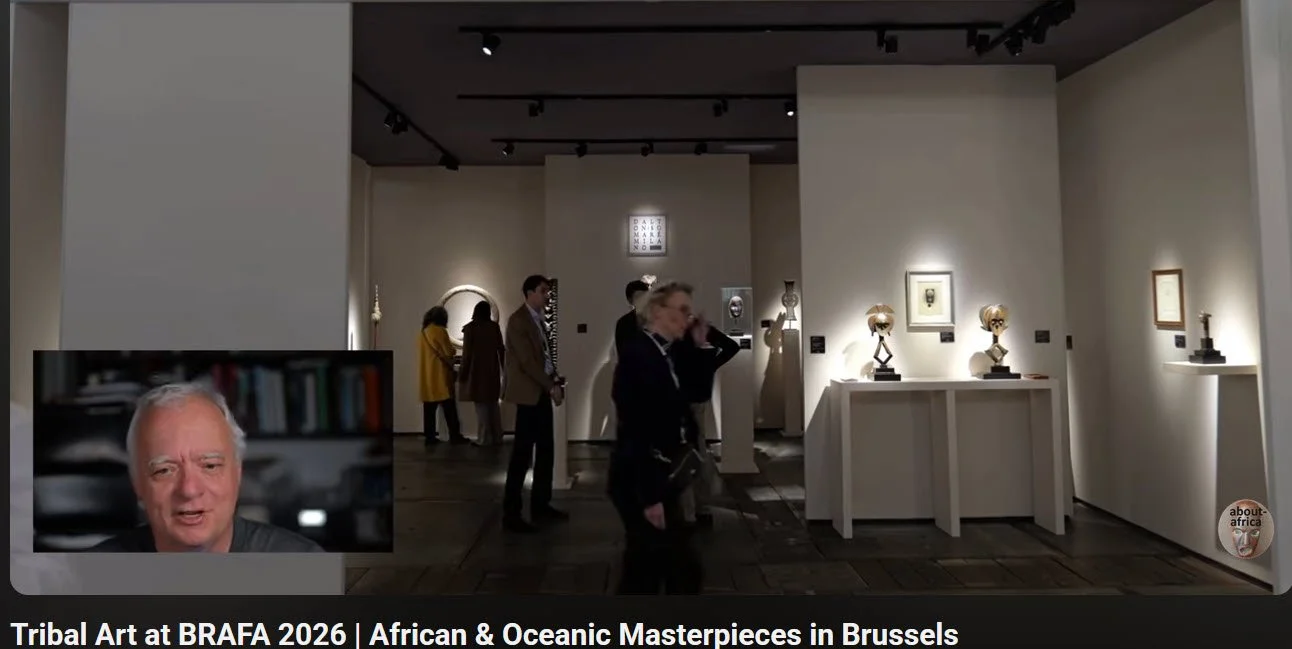
My video explores outstanding examples of traditional African and Oceanic art presented at the BRAFA Art Fair 2026 in Brussels. BRAFA is one of Europe’s leading art fairs, bringing together exceptional works from antiquity to modern times. BRAFA 2026 takes place in Brussels from January 25 to February 1, 2026, and showcases an impressive selection of tribal art, including masks, sculptures, and ritual objects from Africa and Oceania and other areas.
In 2026, the tribal (or ethnographic) art market is navigating a complex intersection of geopolitical, ethical, and economic pressures. It is not a monolith, but rather a space undergoing a significant "recalibration"—moving away from speculative, high-volume models toward more conservative, provenance-focused strategies.
Here are the biggest issues currently confronting the market:
1. The Geopolitics of Repatriation and Restitution
The most profound shift is the acceleration of the global movement to return looted or stolen cultural heritage.
Systemic Demands: The conversation has moved beyond individual items to a broader, systemic critique of colonial-era collection practices. It is increasingly intertwined with demands for reparations, debt relief, and sovereign acknowledgement.
Institutional Reckoning: Major museums and institutions are under intense pressure to evaluate their holdings, leading to voluntary returns and an increase in collaborative stewardship with source communities.
The "Digital Repatriation" Debate: Some institutions are attempting to use high-resolution scans and 3D modeling as a form of restitution. This is highly contentious, with many arguing that these digital surrogates diminish the spiritual and cultural importance of the original objects and serve only to maintain institutional control.
2. Regulatory "Fortresses" and Trade Barriers
The era of seamless, globalized trade for tribal and ethnographic art has been challenged by a rise in protectionist policies.
Tariff Walls: Navigating cross-border trade has become a "bureaucratic nightmare." The dissolution of simplified shipping models (like DDP—Delivered Duty Paid) has driven up transaction costs significantly, disproportionately hurting smaller dealers and the middle market.
Aggressive Reclassification: Customs agents, under pressure to boost revenue, are increasingly using aggressive reclassification tactics. Objects containing multiple materials (e.g., textiles, wood, and organic pigments) are frequently miscategorized as "manufactured textiles," triggering heavy protectionist duties.
3. Market Contraction and "Fortress Mentalities"
The art market as a whole is dealing with the hangover of speculative bubbles, and the tribal sector is no exception.
Shrinking Collector Base: There is a consensus that the pool of active, entry-level collectors is shrinking, with established buyers becoming more cautious and risk-averse.
Fair Fatigue: The high cost of participating in art fairs—coupled with uncertain sales—has forced many dealers to scale back or abandon the fair circuit altogether. This has led to a consolidation, where only the most prominent or regionally distinct events survive.
The "Safety" Focus: In this uncertain economic environment, buyers are fleeing speculative "hot" trends in favor of "trophy assets" or items with ironclad, unimpeachable provenance.
4. The Ethics of "Market Objects"
There is a growing debate about how to handle objects that were created explicitly for the market (e.g., items produced for travelers or anthropologists) but hold cultural significance.
Redefining Significance: The legal silence of frameworks like NAGPRA (in the U.S.) regarding commercial-market objects is being challenged. Professionals are increasingly encouraged to consult with source communities about these objects rather than assuming they are "non-significant," leading to more complex, ethical curatorial standards.
Summary Outlook
For 2026, the market is characterized by strategic adaptation. The focus has shifted from high-growth speculative acquisition to long-term stewardship, transparency, and deep provenance research. Dealers and collectors who prioritize ethical engagement and navigate the new, fragmented regulatory landscape with agility are those currently finding stability.
Would you like me to research how specific regions or types of tribal art (such as West African bronzes vs. Indigenous North American artifacts) are being impacted by these current restitution trends?
Sources: momaa.org; itsartlaw.org; auroraathena.com; observer.com; www.aam-us.org;