A Brief History of Beads in Native America
From prehistoric shell ornaments to the extraordinary beadwork of the nineteenth century
Beads have been an important part of Native American material culture for thousands of years, long before European contact. Archaeological evidence demonstrates that Indigenous peoples manufactured beads from shell, bone, stone, turquoise, copper, and other natural materials. They served as personal adornment, expressions of identity and status, ceremonial objects, and valuable items of exchange.
Before European Contact
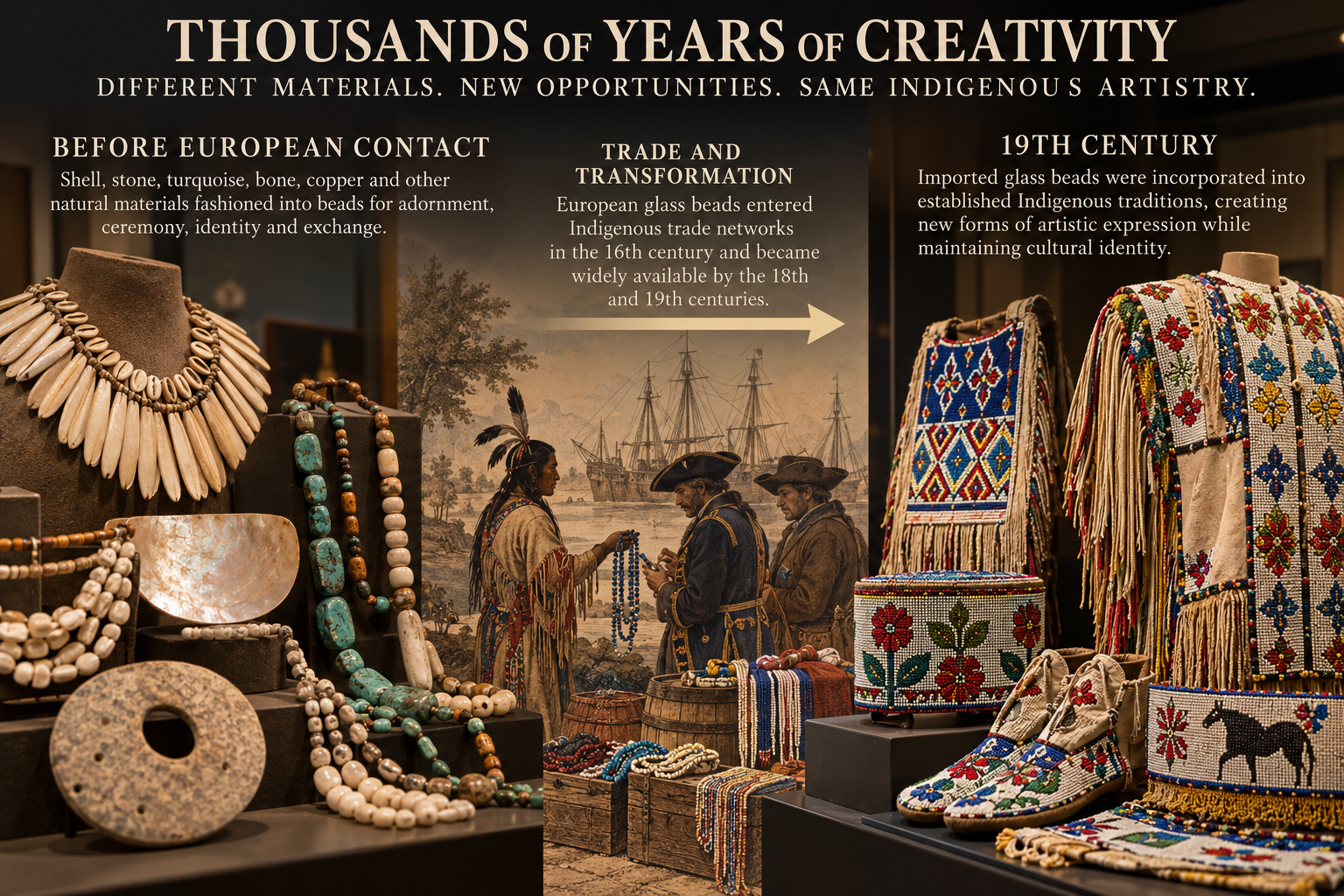
Beadmaking traditions developed independently throughout North America. Marine shells traveled hundreds of miles through extensive Indigenous trading networks. Among the peoples of the Southwest, turquoise became particularly important, while Great Lakes and Eastern Woodlands communities used shell, freshwater pearls, copper, and stone.
Wampum, made from carefully shaped white and purple shell beads, acquired profound diplomatic, political, and ceremonial importance among northeastern Indigenous nations. Wampum belts recorded agreements, affirmed relationships, and preserved collective memo
Native American Beadwork: The Cultural Impact of European Trade Beads
Long before European contact, Native Americans in what is now the United States had developed sophisticated decorative traditions using porcupine quills, shell, bone, stone, turquoise, copper, animal teeth, and natural pigments. These materials adorned clothing, ceremonial objects, weapons, and personal possessions, expressing cultural identity, social standing, spiritual beliefs, and artistic achievement.
Porcupine quillwork was the principal decorative tradition that European glass beads eventually supplemented or replaced in many Plains and Great Lakes communities. Quills were collected, softened, dyed, flattened, and stitched onto hides in intricate geometric patterns. The process was labor-intensive and required exceptional skill. Other Indigenous traditions, particularly shell and stone beadmaking, continued alongside the new glass materials.
Trade and Artistic Transformation
European glass beads entered Indigenous trade networks beginning in the sixteenth century, initially through Spanish exploration and commerce, followed by French, Dutch, and English trading enterprises. By the eighteenth century, beads were established commodities in the fur trade, and during the nineteenth century, increasingly abundant supplies of small seed beads transformed Native American decorative arts.
Glass beads offered brilliant colors, relatively uniform sizes, and easier application than prepared quills. Artists could create increasingly elaborate designs and cover entire surfaces with dense fields of color. Importantly, Native Americans did not simply adopt European designs. They incorporated imported materials into established Indigenous artistic traditions, adapting older patterns and developing new forms of expression.
Cultural and Economic Consequences
The impact extended well beyond decoration. Trade beads became part of Indigenous economic and social networks, circulating through exchange, gift-giving, and commerce. Their acquisition and use reflected changing relationships among Native communities, European traders, and later the expanding United States.
Beadwork also became an important expression of personal and collective identity. Decorated clothing and possessions could communicate community affiliation, family traditions, ceremonial roles, and individual artistic accomplishment. Patterns were not universally fixed symbols, however; their meanings varied considerably between communities and makers.
Women were especially important in the development and transmission of many beadwork traditions. Their technical knowledge, artistic innovation, and labor contributed to both household economies and the preservation of cultural practices.
During the nineteenth century, this artistic expansion coincided with military conquest, forced removal, reservation confinement, and the disruption of traditional economies. Beadwork became one means of maintaining cultural continuity while adapting to changing economic circumstances. The growing market for objects purchased by tourists, collectors, and museums also provided income and encouraged new forms of artistic production.
The cultural significance of glass beads lies in the transformation of a foreign commercial product into an Indigenous artistic language. European traders supplied the material, but Native artists controlled its application, design, and cultural meaning. Rather than simply representing European influence, historic beadwork demonstrates Indigenous creativity, adaptation, and cultural persistence.
Historical Documentation
Several museum and government sources demonstrate the scale and significance of this transformation.
The National Park Service documents how Meriwether Lewis purchased glass beads in various sizes and colors for the 1804 expedition, knowing they were desirable trade commodities. The expedition also discovered that Indigenous preferences did not always correspond to European assumptions about value.
The Metropolitan Museum of Art reports that shipments of glass beads to the United States during the 1880s reached approximately six million pounds annually, illustrating the enormous scale of the trade by the late nineteenth century.
The National Museum of the American Indian documents the social and spiritual significance of earlier quillwork traditions, including specialized women's quillworking societies in which knowledge and the right to practice particular techniques were formally transmitted. The adoption of glass beads therefore altered not merely decoration but established systems of artistic knowledge and cultural authority.
The National Park Service also records that beads, metal sewing tools, and imported textiles changed Indigenous production and trade, while Native women participated directly in commercial exchange and helped sustain family economies.
These sources establish that trade beads were much more than decorative imports. They influenced Indigenous commerce, artistic labor, personal status, cultural transmission, and eventually the commercial market for Native American art.
The lasting historical significance is not that European trade created Native American beadwork, but that Native artists transformed imported glass into a powerful medium for expressing and preserving Indigenous culture.