ATADA
What the Bylaws Actually Say
The change from Antique Tribal Art Dealers Association to Authentic Tribal Art Dealers Association substituted a consequential word.
“Antique” primarily concerns age. “Authentic” raises questions of identity, authorship, cultural context and representation. For dealers, collectors, museums, appraisers and Indigenous artists, those distinctions have practical consequences.
ATADA's current bylaws place authenticity at the center of the organization's definition of the material represented by its dealer members. That makes it useful to examine exactly what the bylaws say—and what they do not say.
How ATADA Defines Authentic
ATADA's bylaws define “Authentic Tribal Art and Artifacts” as objects “made for use in a traditional cultural context.”
The definition specifically states that such objects need not be antique. They may be antique, vintage, collectible or contemporary.
The bylaws also define “Authentic” material more generally as handmade in a traditional manner, with traditional materials, by the appropriate cultural members or artists, subject to exceptions contained in ATADA's vetting guidelines.
Age, therefore, is not the determining factor. Cultural production and intended context are central to ATADA's definition.
That creates an ambiguity.
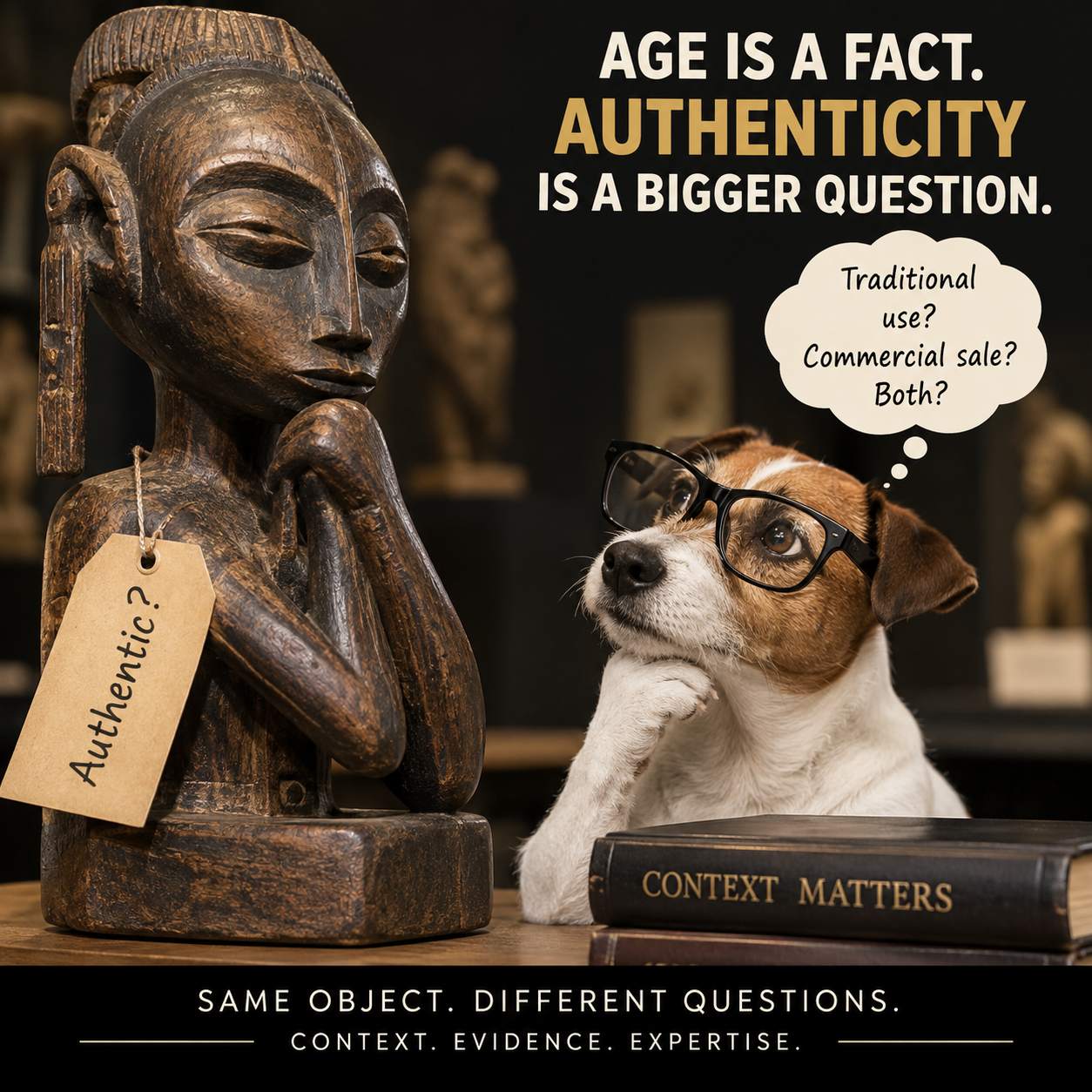
Indigenous artists have long produced objects both for use within their communities and specifically for commercial markets. If an Indigenous artist creates an otherwise traditional object expressly for sale outside the community, how does it fit the requirement that Authentic Tribal Art be “made for use in a traditional cultural context”?
The bylaws do not provide a clear general answer.
They do, however, address commercial production elsewhere. In provisions governing sacred and communal Native American material, ATADA specifically distinguishes those objects from works made by Native American artisans for “commercial or individual use.”
ATADA therefore recognizes commercial Indigenous production. What remains unclear is how that category fits within its broader definition of Authentic Tribal Art.
That distinction deserves clarification.
Authentic Does Not Mean Ceremonial
The bylaws also demonstrate that authentic, traditional, and ceremonial are not interchangeable terms.
ATADA dealer members agree not to acquire, display or sell certain Native American objects known to have important current sacred or communal use. The bylaws simultaneously state that ATADA does not regard objects made by Native American artisans for commercial or individual use as sacred or ceremonial, regardless of age.
An object consequently does not have to be ceremonial to fall within the broader field represented by ATADA. Conversely, an authentic ceremonial object can belong to a category ATADA instructs its members not to trade.
Who Guarantees Authenticity?
ATADA's public website states that its dealers guarantee authenticity, condition and title.
The bylaws provide important context for that statement.
Article X says ATADA members shall use their “best efforts” to guarantee the authenticity of objects they offer, as represented and to the best of their professional knowledge and belief. ATADA's Seller's Guarantee provides buyers with a contractual remedy when material information supplied by the seller proves inaccurate, subject to its terms.
The obligation belongs to the selling dealer.
Article IX separately states that ATADA itself has no liability for representations made by a member concerning an object and that members may not represent that ATADA “vouches for, guarantees or stands behind” those representations.
The distinction matters.
An ATADA dealer assumes obligations concerning representations made in a sale. ATADA itself does not independently authenticate each object sold by its members or guarantee that an individual member's attribution is correct.
What Membership Actually Establishes
ATADA membership establishes that a dealer belongs to an organization with stated professional standards and has agreed to follow its rules.
It does not, by itself, establish the authenticity of a particular object.
Dealer reputation, association membership, publication history, exhibition history and provenance can all contribute useful information. None independently determines authenticity. Identification, attribution, age, provenance, condition and other relevant evidence still have to be evaluated object by object.
That distinction is particularly important in a field in which attribution and authenticity can substantially affect both scholarly interpretation and monetary value.
The Question ATADA Could Clarify
ATADA's bylaws establish several points clearly. The organization recognizes antique, vintage, collectible and contemporary material. It distinguishes sacred and ceremonial status from authenticity. It recognizes Native American objects produced for commercial or individual use. It requires dealer members to stand behind representations subject to stated qualifications while expressly providing that ATADA itself does not guarantee those representations.
One question remains less clear.
How does an Indigenous object made expressly for commercial sale fit within the definition of Authentic Tribal Art requiring an object to have been “made for use in a traditional cultural context”?
That is not an accusation about ATADA's motives or direction. It is a question created by the language of the bylaws themselves.
For collectors, dealers, museums and appraisers, the practical distinction is important. Membership establishes adherence to an organization's professional requirements.
Authentication remains an evidentiary determination made object by object.