Parcours des Mondes 2026
I’d reduce it substantially while preserving the central argument: Parcours was successful, but that success may reflect the emergence of a different tribal-art market rather than a return of the old one.
A Successful Fair—and a Warning About the Future of Tribal Art
By John Buxton / ArtTrak
The 25th Parcours des Mondes presented the tribal-art market with an intriguing contradiction: new faces, but fewer dealers.
The September fair brought international collectors back to Saint-Germain-des-Prés, with Americans particularly noticeable. Dealers reported unfamiliar buyers entering their galleries and making purchases from the low thousands of euros into the upper reaches of the market.
By conventional measures, Parcours 2026 was a success.
Yet the fair was considerably smaller than a year earlier, with approximately 45 exhibitors compared with roughly 60. That raises a more important question than whether dealers had a good week:
Are we seeing a recovery of the traditional tribal-art market—or the emergence of a different one?
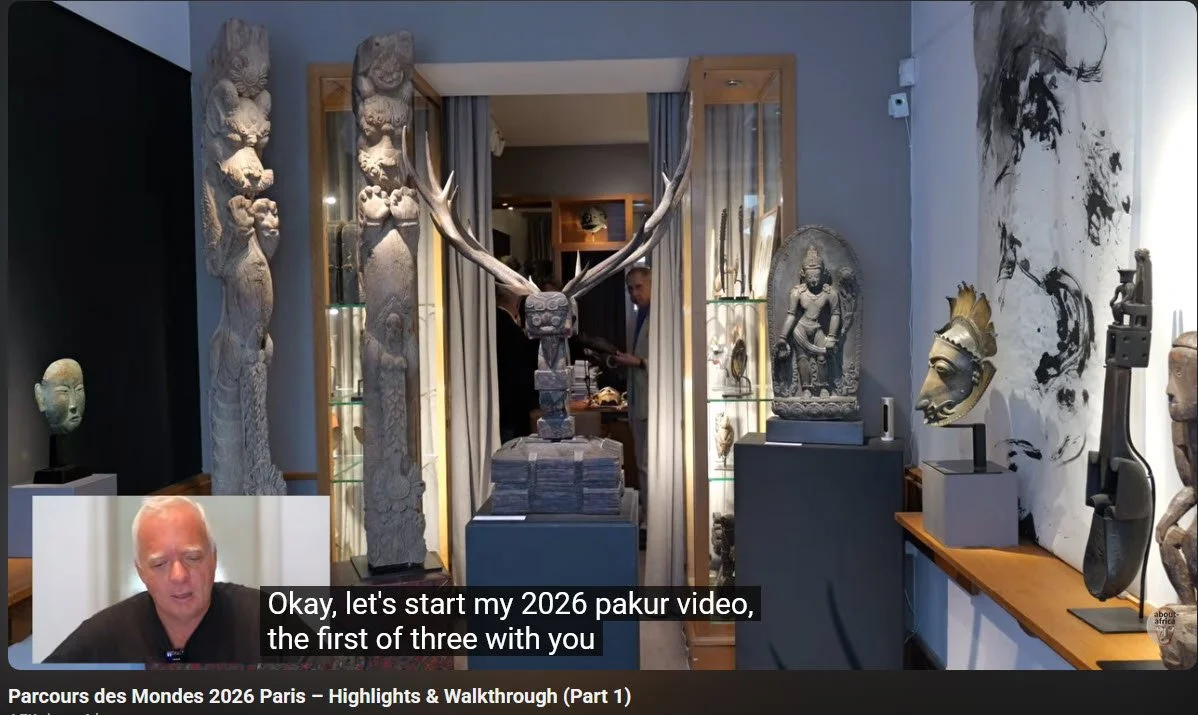
A Changing Collector
One of the most encouraging signs was the appearance of new buyers.
Lucas Ratton offered 121 headrests from a collection assembled over approximately twenty years and reportedly sold about one-third. Most were priced between €1,000 and €10,000. Just as significant, Ratton said he was seeing unfamiliar faces.
Pablo Touchaleaume reported approximately 12 sales averaging around €10,000, while Galerie Flak reported transactions from about €1,500 to more than €50,000.
Touchaleaume also made an important observation. In earlier years he may have brought too many objects priced between €100,000 and €200,000. Today he sees a much larger audience for material between approximately €1,000 and €30,000.
That may represent more than a change in dealer inventory. It may signal a structural change in the market.
New collectors may be perfectly willing to spend €3,000, €10,000 or €25,000 for an interesting African, Oceanic or Indigenous object. Convincing them that the same object should cost €125,000 is another matter.
The Squeezed Middle
This does not mean the high end is disappearing. Exceptional objects—with quality, rarity, provenance and aesthetic power—continue to attract sophisticated buyers.
The vulnerability may lie in the middle.
At one end are masterpieces. At the other is an accessible market of authentic, attractive and interesting objects that allow new collectors to participate without making six-figure commitments.
Between them is material carrying ambitious valuations established during stronger years.
An object priced at €8,000 does not have to be a masterpiece.
An object priced at €150,000 increasingly does.
That distinction could force substantial adjustments in the middle of the market.
Where Will the Great Objects Come From?
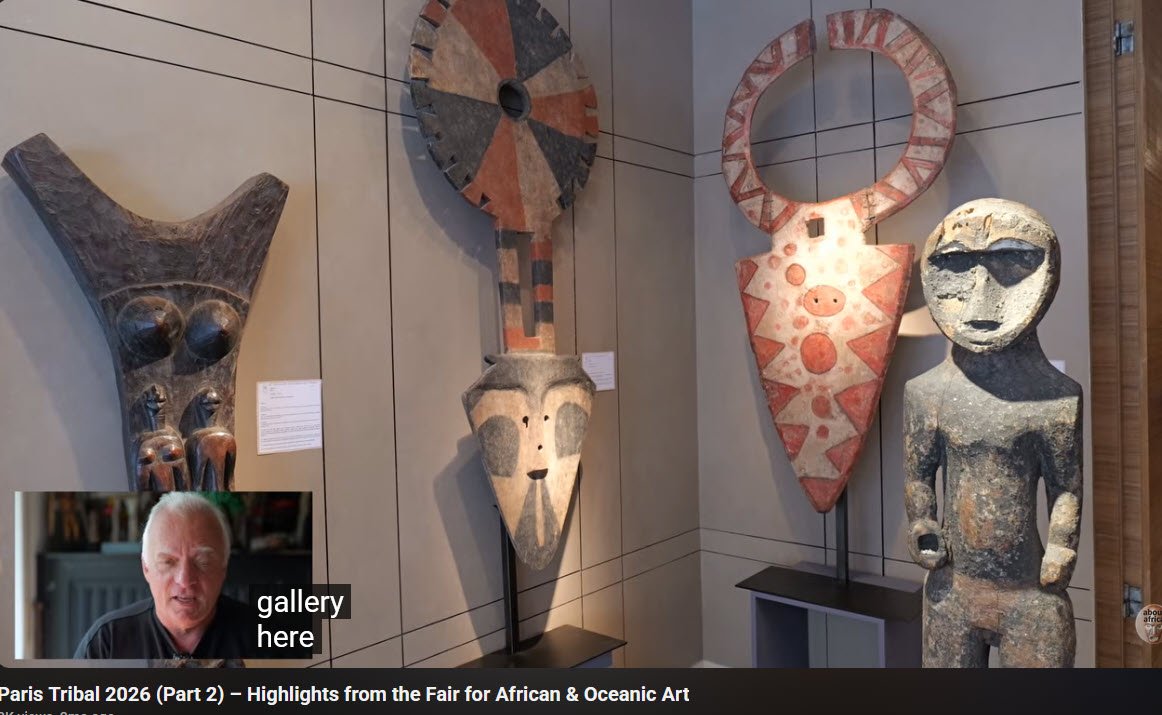
There is another problem.
Ratton observed that finding good objects at rational prices is becoming more difficult than finding customers. Parcours director Yves-Bernard Debie similarly suggested that availability of important material is increasingly the limitation.
The supply is finite. Many major African and Oceanic works are already in museums or important private collections.
That creates a paradox: collectors increasingly want exceptional objects just as exceptional objects become harder to find.
Scarcity may strengthen prices for masterpieces. But scarcity does not turn lesser objects into masterpieces.
Selling Objects Is No Longer Enough
Parcours also demonstrated how the business itself is changing.
Successful dealers increasingly presented exhibitions rather than inventories. Ratton built a focused exhibition around headrests with a publication and lecture. Galerie Flak collaborated with designer Harry Nuriev. Other dealers connected historical objects with contemporary art and design.
For a new collector, simply putting a Baule mask on a pedestal with a large price tag may no longer be enough.
Dealers increasingly have to explain: Who made it? What was it used for? What distinguishes it? Where has it been? Who owned it? And why should someone buy it instead of contemporary art, photography or design?
The successful dealer increasingly has to be curator, historian, educator and storyteller.
A Successful Fair, but a Different Market
Parcours 2026 was successful. But saying “the tribal-art market is back” would miss the more interesting point.
The old market may not be coming back.
A new one may be replacing it.
It appears more selective about quality, more demanding about provenance, more resistant to inflated prices and more interested in compelling presentation.
The challenge is clear: fewer specialist dealers, an aging traditional collector base, increasing provenance and regulatory requirements, a shrinking supply of major objects and pressure on the middle of the market.
But Parcours also suggested the solution.
Price objects according to quality. Give new collectors an accessible entry point. Research and document objects properly. Explain why they matter. Build exhibitions around ideas rather than inventory.
And reserve exceptional prices for exceptional objects.
Perhaps the most encouraging statistic from Paris wasn't a million-euro asking price. It was Ratton selling roughly a third of 121 headrests—many priced between €1,000 and €10,000—while seeing people in his gallery whom he had never seen before.
Those new faces matter.
The future of tribal art will not be determined by whether today's established collectors buy one more masterpiece.
It will depend on whether the people walking into Parcours for the first time in 2026 become the serious collectors of 2036.
This removes much of the repetition while retaining the strongest numbers, examples, and your central argument.