Who Owns Benin Art?
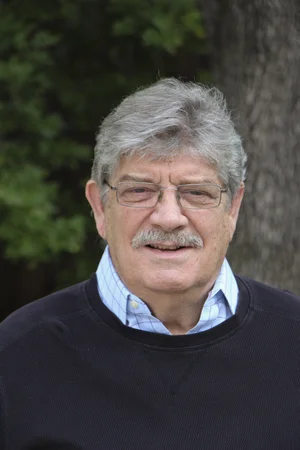
In response to my email of August 23, 2026 to Dr. Ndubuisi C. Ezeluomba
“The points touched upon are very concise and touch upon all the important questions revolving around the repatriation of Benin art.
Public perceptions about the whole repatriation business in Nigeria is tangled in the questions that your drafts sets out to pose. I like how you pick out the points one after the other. Many objects from Benin is contonusly been mistaen for looted objects; even within Benin there were people who acquired or owned those objects even before the invation and looting of the kingdom in 1897.
We will continue to grapple with the problems within Nigeria and Benin city, since the MOWAA appearance has been muddled with the dirty party politics of Nigeria. Thanks for doing this article!”
Dr. Ndubuisi C. Ezeluomba (widely known as Endy Ezeluomba) is the Curator of African Art at the Virginia Museum of Fine Arts (VMFA (see bio below)
The question of who controls the royal art of Benin after restitution is becoming more important than the original question of whether Western museums should return it. Developments since 2023 suggest that restitution is evolving from a relatively straightforward West-versus-Nigeria debate into a far more complex struggle over ownership, custody, access, institutional authority, and ultimately, who has the right to interpret Benin's history.
The Decisive Shift: From National Heritage to Royal Property
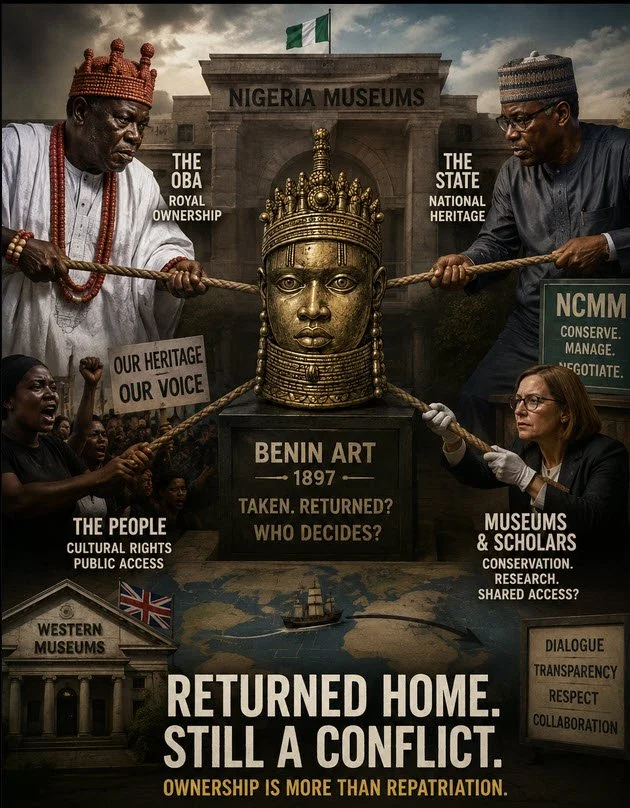
The pivotal development was President Muhammadu Buhari's declaration in March 2023, which vested ownership of repatriated Benin objects in the Oba of Benin, rather than placing them solely under the authority of the Nigerian state or the National Commission for Museums and Monuments (NCMM).
Scholarly analyses describe the decree as explicitly transferring ownership to the Oba, while contemporary reporting noted that the decision fundamentally altered assumptions many Western museums had made about where restituted objects would ultimately reside.
That distinction is enormously significant.
The objects were taken from the royal palace during the 1897 British punitive expedition and were, in large part, products of a court-controlled artistic system. This gives the Palace a compelling historical argument: if the objects were taken from the Oba's palace, restitution logically means returning them to the institution from which they were seized, rather than simply transferring them to the modern nation-state that emerged later.
The implications, however, extend far beyond that principle.
Control Is Becoming the Central Issue
The 2023 decision potentially separates several concepts that have often been treated as though they were synonymous:
Repatriation → Ownership → Custody → Museum Display → Scholarly Access → Public Access
In reality, these are distinct and independent issues.
An object may be returned to Nigeria yet be owned by the Oba. It may be owned by the Oba while being conserved by the NCMM. It may be conserved by the NCMM while ultimately being displayed in a royal museum. It may also be loaned by the Palace to museums elsewhere in Nigeria or, potentially, back to institutions overseas.
Indeed, in February 2025, the NCMM and the Oba reached an arrangement under which the commission would assist in retrieving, conserving, and initially displaying returned objects while the proposed Benin Royal Museum is being developed. Reuters reported that the NCMM recognized the Oba's ownership while assuming a significant practical role in negotiations, conservation, and administration.
This increasingly appears to be the emerging model:
Royal ownership + professional state conservation + negotiated museum access
If that arrangement endures, the Palace does not necessarily need to manage every aspect of museum administration itself. It can retain ultimate authority while delegating conservation, research, storage, and exhibition responsibilities to professional institutions.
How This Changes the Position of MOWAA
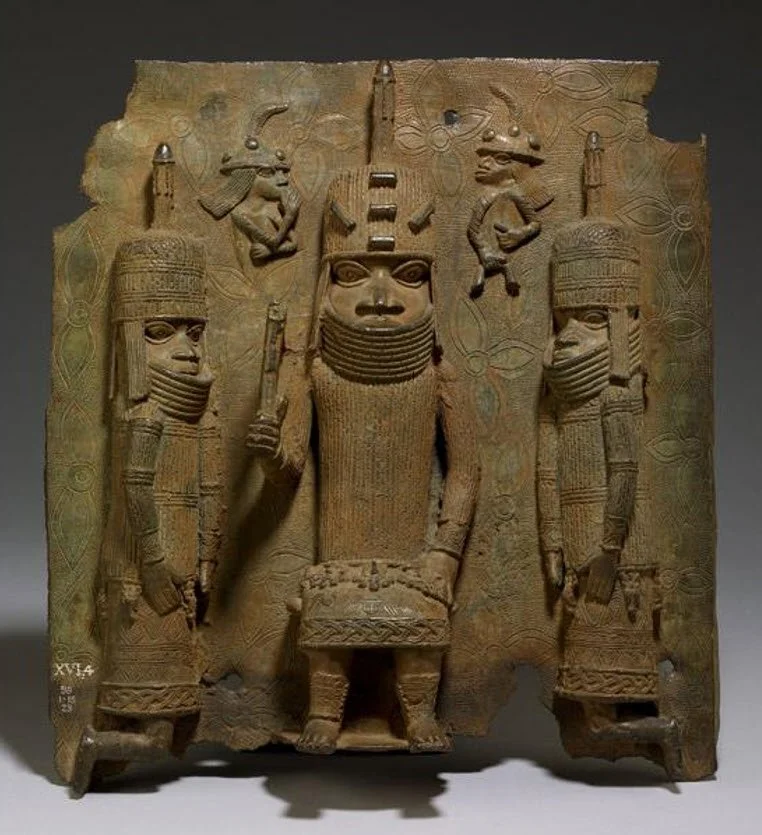
The Museum of West African Art (MOWAA) was originally closely associated with plans to display returning Benin material. Over time, however, the institution has distanced itself from the idea that it will serve as the primary repository for restituted Benin objects.
Today, MOWAA presents itself more broadly as an institution dedicated to West African heritage, rather than solely to the stewardship of returned Benin artworks.
The political tensions surrounding this issue became unmistakable in November 2025, when protesters disrupted MOWAA's planned opening. According to reporting by the Associated Press, the dispute centered on concerns that the institution was infringing upon the Oba's cultural authority. As a result, restituted Benin Bronzes were not scheduled for display there.
This development is particularly significant because MOWAA represents a fundamentally different institutional model: internationally funded, professionally administered, conservation-focused, and broadly West African in scope rather than specifically tied to the royal court of Benin.
The Palace, by contrast, represents something quite different: hereditary cultural authority and direct historical continuity with the institution from which many of the objects were originally removed.
Neither model automatically resolves every challenge.
Where This Appears to Be Heading
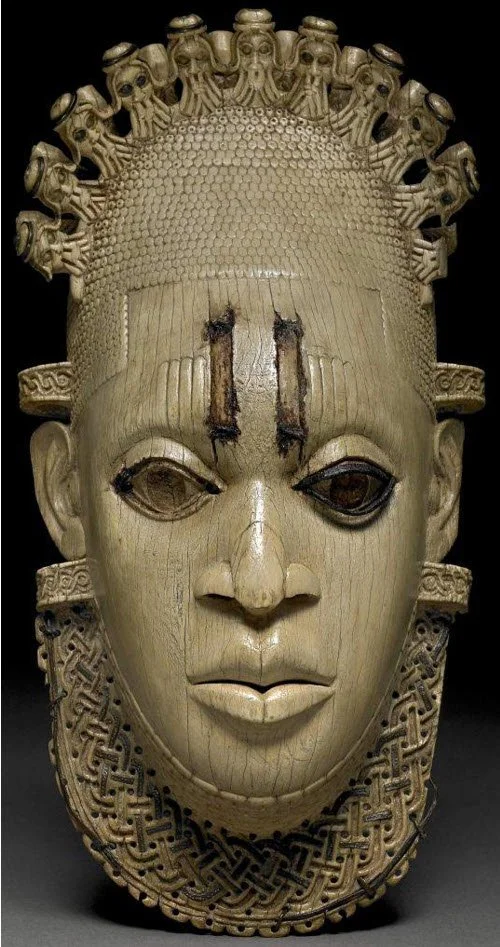
The most likely outcome is neither the complete nationalization of the Benin corpus nor the absorption of all returned objects into a private royal collection. Instead, we may be witnessing the emergence of a three-tier system of authority and control.
At the highest level will be the Oba and the Royal Palace, asserting ultimate ownership and cultural authority over objects demonstrably removed from the royal palace in 1897.
Below that will be the NCMM and Nigeria's museum professionals, responsible for much of the practical work, including documentation, conservation, storage, international negotiations, research, and exhibition management.
Alongside both will be institutions such as MOWAA, universities, and foreign museums, which can contribute conservation expertise, scholarly research, exhibitions, and international access but increasingly cannot assume that professional museum credentials alone confer authority over the objects themselves.
Background
Dr. Ndubuisi C. Ezeluomba, widely known as Endy Ezeluomba, is the Curator of African Art at the Virginia Museum of Fine Arts (VMFA).
Background and Education
Raised in Benin City, Nigeria, Ezeluomba initially trained as an artist before pursuing advanced academic study in art history.
Degrees and Academic Achievements:
Bachelor of Arts (B.A.) in Fine and Applied Arts from the University of Benin, Nigeria.
Master's Degree from the University of Ibadan, Nigeria, where his thesis focused on the contemporary Nigerian sculptor Obi Ekwenchi.
Ph.D. in Art History from the University of Florida, Gainesville. His dissertation, Olokun Shrines: Their Functions in the Culture of the Benin-Speaking People of Southern Nigeria, received the University of Florida Graduate School Doctoral Dissertation Award.
Professional Career
Virginia Museum of Fine Arts (VMFA)
Ezeluomba served as the Andrew W. Mellon Curatorial Research Specialist in African Art from 2016 to 2018 before returning to VMFA as the Curator of African Art in May 2022. In this role, he oversees the development, interpretation, and stewardship of the museum's extensive African art collection, which includes more than 1,200 works spanning from the first millennium BCE to the 21st century. He also leads provenance research related to colonial-era acquisitions and repatriation initiatives.
New Orleans Museum of Art (NOMA)
From 2018 to 2022, Ezeluomba served as the Françoise Billion Richardson Curator of African Art, becoming the museum's first Black full-time curator. During his tenure, he organized exhibitions including Ancestors in Stone and Body Adornment in African Art, and co-curated Black Orpheus: Jacob Lawrence and the Mbari Club.
University of Florida, Harn Museum of Art
Ezeluomba contributed as a consultant and member of the curatorial team for major exhibitions, including Elusive Spirits: African Masquerades and Kongo Across the Waters.
Summary
A respected scholar, curator, and researcher, Dr. Ezeluomba has built a distinguished career focused on African art, cultural heritage, museum stewardship, and provenance research. His work bridges academic scholarship and museum practice while advancing public understanding of African artistic traditions and their global significance.
Publications & Scholarship
Dr. Ezeluomba is a widely published authority on historic African shrines, cultural patrimony, and museum provenance. His essays and chapters have appeared in journals and volumes such as African Arts, Black Art Quarterly, Hyperallergic, Routledge Encyclopedia of African Studies, and Phaidon's African Artists: From 1882 to Now. He is also a co-author of The Arts of Africa: Studying and Conserving the Collection (2021).